The Five-Pound Test: What Britain's Cheapest Subscription Tier Actually Delivers in 2026
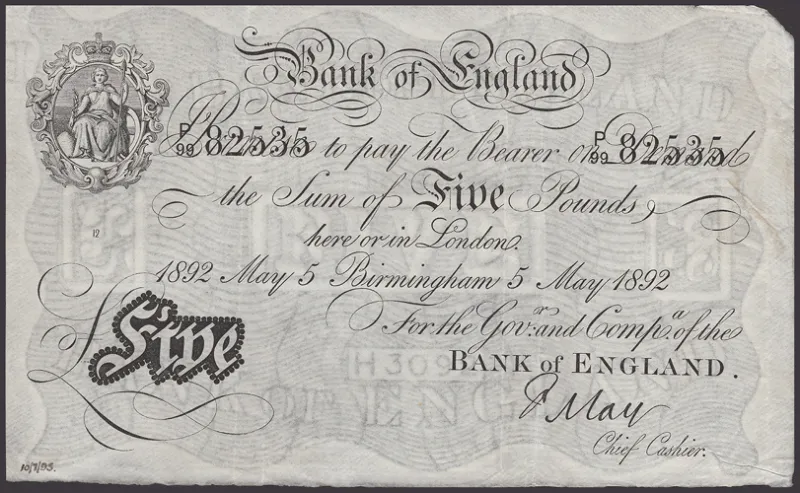
Photo: AnonymousUnknown author (for Bank of England), Public domain, via Wikimedia Commons
£5 a month is the subscription equivalent of a pint and a packet of crisps: small enough to dismiss, expensive enough to notice when three of them renew on the same day. In 2026 the sub-£5 shelf is crowded. Streaming add-ons, fitness apps, news memberships, cloud storage, delivery perks and cut-down software all compete for the same loose change. The question is not whether these plans are cheap. It is whether they are useful after the introductory month, the annual renewal and the first add-on tier have done their work.
Prices move, and providers love a quiet repackaging. Treat the figures below as a map of the market rather than a quote. The commercial test is simpler: what does a fiver replace, and what does it quietly commit you to?
The £5 shelf is not one market
Cheap subscriptions fall into two rough camps. The first contains plans that do one narrow job well: extra cloud storage, a password manager, a basic software licence. The second contains plans that are really shop windows for a bigger purchase: a streaming add-on that nudges you towards the full service, a fitness app that sells equipment, a delivery pass that makes you order more often to justify itself.
That distinction matters more than the headline price. A £4.99 plan that saves you £15 elsewhere is good value. A £4.99 plan that exists mainly to make a £12.99 plan feel inevitable is a marketing funnel with a direct debit attached.
Streaming add-ons: the trial that never quite ends
The streaming market has spent years splitting into tiers, and the cheap end is now full of add-ons. Niche services, ad-supported upgrades and channel-style bundles often sit around the £4 to £5 mark. Some are genuinely useful if you have one specific habit: a love of reality television, a taste for documentary, a child who will watch the same programme until the sun goes down.
The hidden upsell is rarely the add-on itself. It is the ladder. Remove ads for a few pounds more. Add HD. Add a second screen. Move to annual billing and discover that the monthly equivalent looked better than the lump sum feels. Before long the fiver is a tenner, and the tenner is part of a bundle you no longer recognise.
A useful rule: if you would not pay the next tier up, do not start at the bottom. Rent the one programme instead. A £4.99 add-on used twice a month is not a bargain; it is a convenience tax.
Fitness apps: motivation versus metadata
Fitness apps have a similar trick. The free tier gives you enough to form a habit; the cheap tier gives you classes, plans or stats; the full tier gives you the experience the app actually wants to sell. Most full-fat fitness services have moved well beyond £5 in 2026, so the sub-£5 plans tend to be narrower: a single training style, a limited library or a basic tracking feature.
This is not automatically bad. If a £4.99 plan gets you walking, stretching or lifting three times a week, it is cheaper than a gym you avoid. But check what happens when the introductory period ends. Some cheap plans become annual commitments. Others require equipment, a heart-rate monitor or a subscription to a second app to make sense of the data. The fiver is sometimes the entry fee, not the price.
News memberships: paying for the front page
A modest news membership can sit near £5 a month, especially on a supporter-style plan or a promotional rate. For people who read a title every day, this can be excellent value. You are paying for reporting, analysis and the habit of a front page that is not entirely dictated by an algorithm.
The risk is the renewal. Promotional rates often last a few months, then step up. Annual plans can look cheaper per month but demand a lump sum and make cancellation less casual. If you mainly skim headlines, a fiver is probably better spent elsewhere. If you read two or three articles a day, it is one of the more defensible cheap subscriptions on the market.
Cloud storage: the one that usually earns its keep
Cloud storage is the least glamorous part of the £5 shelf, and often the most honest. Apple iCloud+, Google One and Microsoft 365 Basic all have entry tiers in the low single figures for modest storage. The plans are boring because they do a boring job: they stop your phone from nagging you and keep your files in one place.
The upsell arrives when you run out of space again. Storage tiers climb quickly, and family sharing can blur who is paying for what. Still, if a £1 to £3 plan delays a new phone or prevents a panicked delete of holiday photos, it is doing real work. Check the renewal date and the next tier up before you settle in.
Delivery perks and software: read the small print
Delivery passes and student-style memberships often hover near the £5 mark, but they are not really subscriptions to a service. They are subscriptions to a spending habit. A delivery pass only pays off if you order often enough, and the minimum basket, service fee and small-order charge can eat the saving. If the pass makes you order twice as often, it is not a discount; it is a loyalty scheme for the takeaway industry.
Cheap software is more straightforward. A basic Microsoft 365 plan, a password manager or a cut-down creative tool can be genuinely useful at this price. The trap is seats and storage. One user at £2 is fine; four users and an annual renewal can turn a bargain into a household expense nobody remembers approving.
The hidden upsell map
Before you tap subscribe, look for five things:
- The introductory price and the renewal price, side by side.
- Whether annual billing is the default after month one.
- The next tier up and what it costs.
- Whether family sharing or extra seats change the price.
- The cancellation route. If it takes more than two minutes, that is part of the product.
A three-question test before you pay
First, would I still want this at £7? If not, the fiver is doing too much work. Second, what does it replace? A more expensive subscription, a repeated rental, a storage upgrade or nothing at all? Third, can I leave without a phone call, a retention maze or a penalty?
The verdict
A £5 subscription is not automatically good value, and it is not automatically filler. The best cheap plans are narrow, useful and easy to leave: cloud storage, a focused news membership, a basic software tool, a fitness app you actually open. The worst are shop windows for bigger plans, dressed up as bargains.
The Centaur Subscriptions view is simple: judge the fiver by what happens after the fiver. If the plan still makes sense at renewal, keep it. If it only works because you forget about it, cancel it and spend the money on something you will notice.